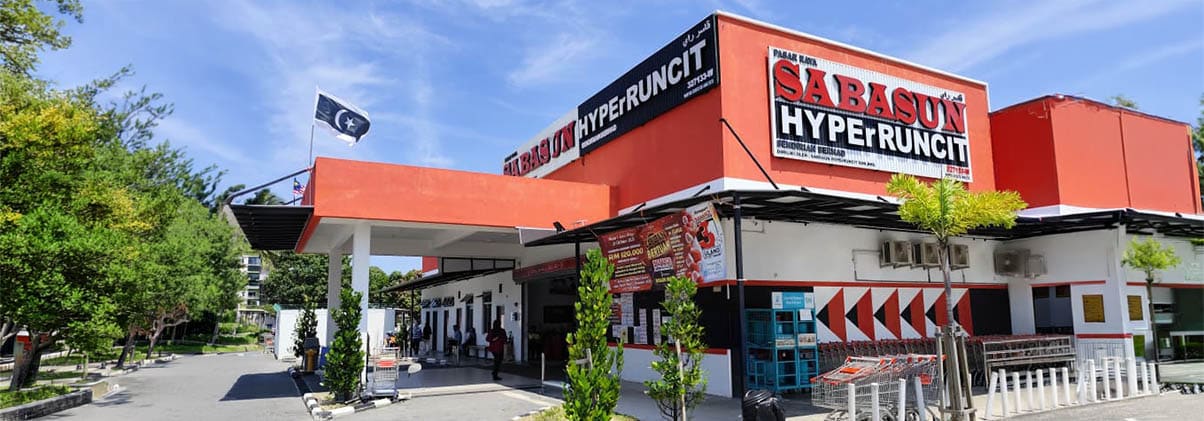
From Weeks to Days: How Sabasun Uses Location Intelligence to Make Faster, Smarter Expansion Decisions
Where should your next business location be? For Sabasun HyperRuncit, TM One SmartMap is helping make expansion planning faster and more data-informed. What previously took 3–6 […]
Here’s How Malaysia is Stepping Up Our ESG Efforts
In Malaysia, banks are stepping up in their journey into more sustainable financing and operating practices, making efforts to integrate environmental, social and corporate governance […]
Lebih Daripada Ketersambungan: Bagaimana SchoolNet Menyokong Pembelajaran Digital di Seluruh Johor
Inisiatif SchoolNet bermatlamat merapatkan jurang digital antara kawasan bandar dan luar bandar dengan menyediakan akses internet jalur lebar kepada kira-kira 10,000 sekolah di seluruh negara. […]
Digital Transformation has become a core driver of organisational change in the current era. In the meantime, the Energy industry has played a pivotal role […]
TM One Brings Government Customers Together for a Celebration of Partnership and Connection
TM One hosted the Durian Feast 2026 to celebrate and strengthen its enduring partnerships with Malaysian government customers. This informal event fostered trust and mutual […]
Rehabilitation of Nation’s Healthcare - Transforming Healthcare through the Post Pandemic Era
The COVID-19 outbreak has placed a massive strain on the global healthcare sector’s workforce, infrastructure, and supply chain. Medical practitioners are exhausted, and healthcare systems […]
From Visibility to Discipline: 7 Smart Solutions Transforming Modern Logistics and Transportation
TM One’s smart services ecosystem transforms modern logistics by turning raw data visibility into actionable operational discipline. Navigating modern supply chain complexity requires connecting intelligence […]
If we take an overview of what smart manufacturing means today - it is generally described as the application of artificial intelligence (AI) and automation […]
From Weeks to Days: How Sabasun Uses Location Intelligence to Make Faster, Smarter Expansion Decisions
Where should your next business location be? For Sabasun HyperRuncit, TM One SmartMap is helping make expansion planning faster and more data-informed. What previously took 3–6 […]
Empowering Smart Manufacturing: How TM One Cloud Drives Industrial Resilience & Agility
The shift towards smart manufacturing is more than a technology transformation. For manufacturers navigating Industry 4.0, TM One Cloud provides the secure, scalable and resilient […]
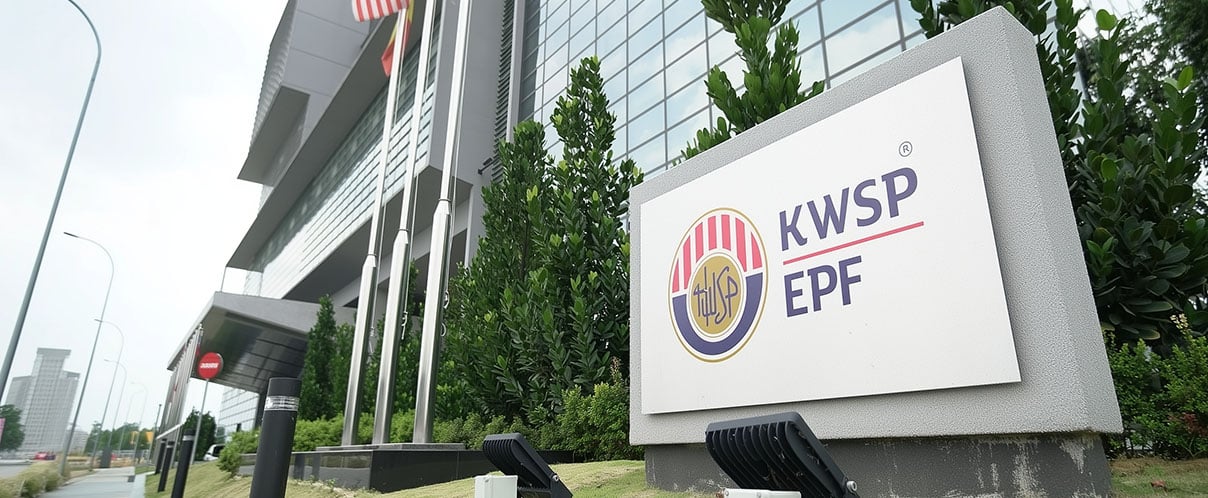
Empowering the Future of Work: How EPF Transformed Collaboration Through Intelligent SD-WAN Connectivity
Discover how EPF transformed nationwide collaboration with TM One’s Managed SD-WAN and Security Service Edge, achieving secure, resilient, and intelligent connectivity. Explore how your organisation […]
From Weeks to Days: How Sabasun Uses Location Intelligence to Make Faster, Smarter Expansion Decisions
Where should your next business location be? For Sabasun HyperRuncit, TM One SmartMap is helping make expansion planning faster and more data-informed. What previously took 3–6 […]
Lebih Daripada Ketersambungan: Bagaimana SchoolNet Menyokong Pembelajaran Digital di Seluruh Johor
Inisiatif SchoolNet bermatlamat merapatkan jurang digital antara kawasan bandar dan luar bandar dengan menyediakan akses internet jalur lebar kepada kira-kira 10,000 sekolah di seluruh negara. […]
When AI Accelerates Attacks, Can Your Defences Keep Up?
As AI accelerates cyberattacks, organisations must strengthen cyber resilience through integrated threat detection, response and governance. Raja Azrina Raja Othman highlights how cybersecurity has become […]
When AI Accelerates Attacks, Can Your Defences Keep Up?
Author:
Sharmila Theenathayalu
Strategic Communications, TM
Reading time: 5 minutes
Date posted: 21 September 2026
Date modified: 19 September 2026
Nearly 30 years after Malaysia began building its national cyber emergency response through the establishment of MyCERT, the biggest change in the threat landscape is not the volume of cyberattacks, but how quickly they can now take place.
Artificial intelligence (AI) is accelerating that reality, making it easier for cyber attackers to detect vulnerabilities, create convincing phishing activities and launch attacks with much greater speed.
Telekom Malaysia’s Chief Information Security Officer Raja Azrina Raja Othman, a co-founder of MyCERT in 1997, says the nature of cyber threats has changed drastically since those early days.
Three decades ago, cyber threats were more likely to target specific systems and networks. Today, almost every service operates digitally and is interconnected, ranging from banking and government services to corporate operations and critical infrastructure.
“When a cyberattack occurs, the impact is no longer simply a system being disrupted. It can affect operations, finances, customer data, reputation and even services used by the public,” she explains.
The speed at which attacks can take place has also increased at an alarming pace.
“With AI, cyber attackers can easily identify where an organisation is weakest, produce more convincing phishing activities and launch attacks much faster – sometimes remaining undetected for long periods of time.
“Cyber defence can no longer rely on manual processes alone,” she advises.
AI is reshaping the threat lanscape
Attacks move faster while modern services are more interconnected. Cyber defence can no longer rely on manual processes alone.
01
Faster attack execution
AI accelerates vulnerability discovery and attack delivery.
02
AI-Powered Phishing
Convincing attack content can be produced rapidly.
03
Increased digital dependency
Essential operations increasingly depend on connected services.
04
Critical infrastructure exposure
Incidents can affect operations, public services and trust.
"
With AI, cyber attackers can easily identify where an organisation is weakest, produce more convincing phishing activities and launch attacks much faster.
Today, cyberattacks affect more than systems. Their impact can extend across operations, finances, customer data, reputation and services used by the public.
For organisations and the government sector, the challenge is compounded by increasingly complex information infrastructure and the growing number of systems, platform and application integrations.
When IT planning and information security planning do not move in tandem, the risk of exposure to security threats increases.
Strategic Priorities
Security Challenges in the AI Era
Organisation need a coordinated approach that connects technology, governance, people and operational readiness.
AI-Powered Threats
Attacker use AI to identify vulnerabilities and accelerate attacks.
Skill and Preparedness
Teams need effective detection, response, and recovery capabilities.
Growing Digital Complexity
Cloud, application, and integration expand organisational exposure.
Cyber Risk Is Business Risk
Incidents can affect operations, finances, customers, and reputation.
Yet some organisations still regard cybersecurity as an option rather than a necessity. Raja Azrina argues that this needs to change and quickly.
“The reality is that cybersecurity risk is a business risk. If a core system is affected, can the organisation continue to operate? Can they continue to provide services to customers? And how will it impact confidence in their business?
“These are the questions organisations need to consider. Cyber risk needs to be a top management and board room conversation. It involves embedding cyber security requirements into organisational governance, not simply remain an IT checklist,” she advises. Cybersecurity investment, she adds, should be guided by a risk-based approach, with spending prioritised to address the risks involved and their potential impact on the organisation’s business.
Even then, investment does not guarantee an attack will be prevented.
“What differentiates organisations that are truly prepared is how early they can detect a threat, how quickly they can respond and how effectively they can recover to minimise prolonged disruption to operations.
“In cybersecurity, we cannot wait until a crisis occurs before deciding who needs to act,” she warns.
Cyber Resilience Lifecycle
Why detection and response matter
Investment alone does not guarantee prevention. Readiness is measured by the ability to detect early, respond quickly and recover effectively.
01
Detect
Identify threat activity early.
02
Investigate
Assess signal in context
01
Respond
Coordinate decisive action
01
Recover
Minimise disruption
Cybersecurity is not a new area for TM. Raja Azrina says it has long formed part of the company’s responsibility in operating and protecting the country’s digital infrastructure.
“TM’s cybersecurity capabilities have been built through years of experience in protecting our own operations as well as supporting the digital needs of enterprises and government, including networks, cloud, data centres and applications,” she shares.
The company’s teams continuously monitor security across a broad and complex digital environment.
TM’s local cybersecurity specialists are continuously trained in areas including threat detection and monitoring, threat hunting, incident response and digital forensics.
Based on its experience, Raja Azrina says cybersecurity monitoring and controls need to be applied at every level of the network, infrastructure, system and applications, creating layered controls, strengthening the effectiveness of detection and response.
“In cybersecurity, we cannot wait until a crisis occurs before deciding who needs to act,” she warns.
For organisations, the question today is no longer whether they will use AI, but whether they can use it safely while maintaining the trust of customers and the public.
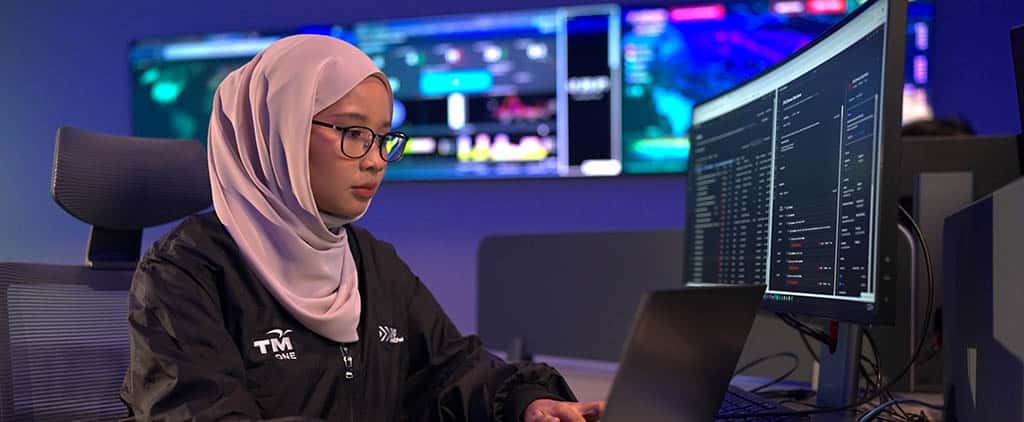
The TM Cyber Defence Centre (TM CYDEC) is designed around this need, providing an integrated view of cyber threats across networks, cloud platforms, applications and digital infrastructure.
Its aim is to help organisations detect threats early, respond faster and reduce potential disruption to critical operations.
“As organisations adopt AI, they face emerging risks related to data exposure, governance, model integrity and regulatory compliance. This makes integrated threat visibility and cyber resilience across digital environments increasingly important,” Raja Azrina says.
Through its Cyber Fusion operating model, TM CYDEC brings together security monitoring and capabilities across connected digital environments, supported by 24/7 threat intelligence.
TM Cyber Defence Centre
Integrated Cyber Defence for The AI Era
TM CYDEC provides an integrated view of cyber threats across networks, cloud platforms, applications, and digital infrastructure.
24/7 Threat Intelligence
Cyber Fusion Operations
Integrated Monitoring
Incident Response
Threat Hunting
Digital Forensics
Correlating security information across diverse platforms and services provides a broader view of potential threat activities, enabling security response teams to assess threats from different contexts.
This empowers more informed decisions, focuses security attention and resources, and helps organisations strengthen their ability to detect, respond to and recover from cyber incidents.
Raja Azrina explains the objective is not simply to defend against individual attacks, but to help organisations identify and respond to threats earlier and reduce their impact on business.
“We believe that with the right cybersecurity strategy, a risk-based approach, as well as effective services and technology, we can help organisations detect and respond to cyber threats earlier and reduce the impact on business.
“Ultimately, we want organisations to be able to continue innovating and harnessing AI with confidence, without compromising security and trust,” she concludes.
Executive summary
AI is accelerating cyber threats, enabling attackers to identify vulnerabilities, automate phishing campaigns, and launch attacks faster than ever before. As organisations become increasingly digital, the potential impact of cyber incidents continues to grow.
Cybersecurity is now a business issue, not just an IT concern. Effective cyber risk management requires board-level attention, governance oversight, and alignment with business continuity and resilience objectives.
Organisations must focus on cyber resilience, emphasising rapid detection, investigation, response, and recovery capabilities to minimise operational disruption and maintain stakeholder trust.
TM CYDEC’s Cyber Fusion approach provides integrated threat visibility across networks, cloud environments, applications, and digital infrastructure, helping organisations strengthen security, improve response effectiveness, and adopt AI with confidence.
Cybersecurity becomes a business risk when fragmented environments create blind spots, slow response, and complicate compliance. As Malaysia’s digital landscape grows more interconnected, unified visibility, coordinated response, and intelligence-led security are increasingly essential to building resilience and sustaining digital trust.
- VANI, Versatile AI News Informer
Cybersecurity becomes a business risk when fragmented environments create blind spots, slow response, and complicate compliance. As Malaysia’s digital landscape grows more interconnected, unified visibility, coordinated response, and intelligence-led security are increasingly essential to building resilience and sustaining digital trust.
- VANI, Versatile AI News Informer
Ready to protect your organisation?
To learn how TM One can support your organisation’s digital transformation priorities, contact TM One for more information.
TM One's enterprise-grade cybersecurity solutions are built for businesses of all sizes, from independent retailers to national chains. Let's talk about the right protection for you.
As Malaysia accelerates its digital economy ambitions, cybersecurity is becoming a boardroom and national resilience priority. For organisations acros[...]
For today’s CEOs, cybersecurity has moved from the server room to the boardroom. It now shapes business continuity, customer trust, regulatory expos[...]
The AI conversation is moving from ambition to readiness. For many enterprises and public sector organisations, the question is no longer simply wheth[...]
Explores how Malaysia can strengthen its digital resilience as AI and Agentic AI become critical enablers of business, government, and national infras[...]