As digital services become central to enterprise and government operations, trust is becoming the true measure of digital transformation. Every login, transaction, and service request now raises a critical question:
"Is this the right user, on the right device, at the right moment?"
Passwords and SMS OTP have supported early digital adoption, but they are increasingly challenged by phishing, account takeover, SIM swap fraud, AI-enabled scams, and rising expectations for seamless access. Organisations must now authenticate users securely and intelligently, without slowing down the digital experience.
Enterprise Mobile Identity by TM One addresses this shift by using trusted mobile network intelligence, number verification, and SIM swap to strengthen identity assurance in the background, moving authentication from a visible checkpoint to a trusted digital layer.
Digital Trust Is Now a Boardroom Priority
Digital trust has moved from a technology issue to a leadership agenda. For banks, government agencies, e-commerce platforms, healthcare providers, and smart cities, trusted identity is essential to secure transactions, citizen access, fraud reduction, and safe digital service delivery.
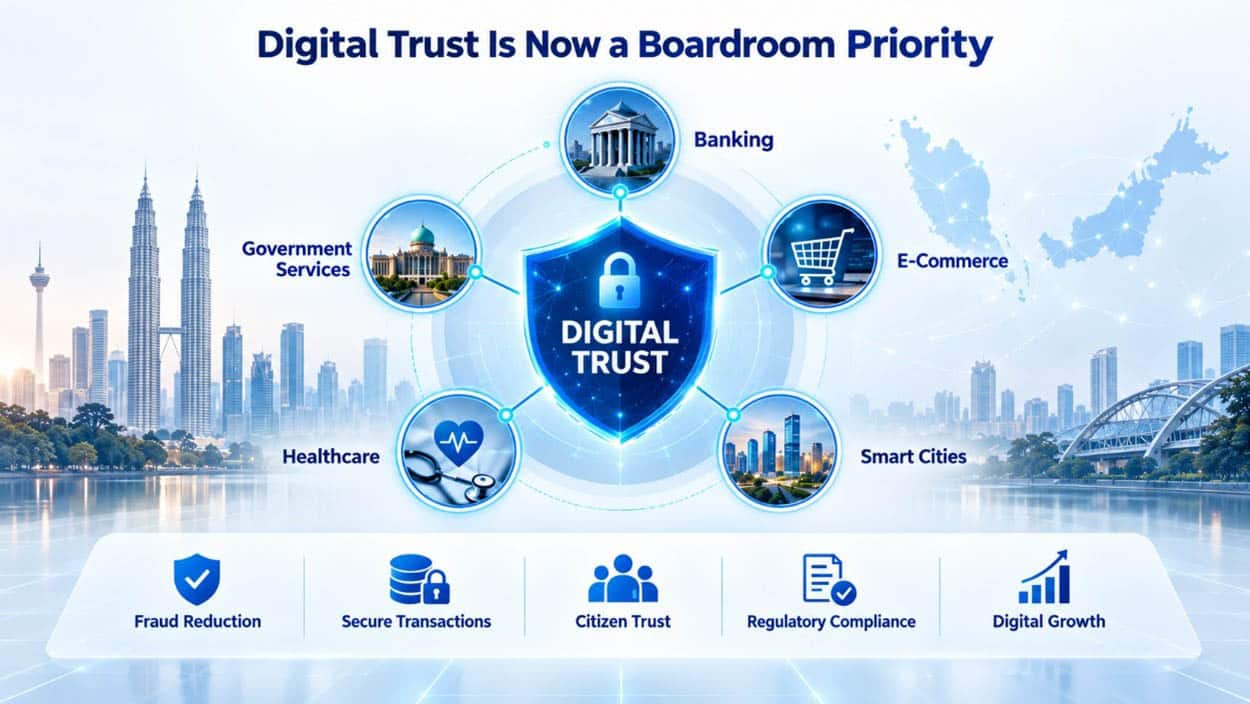
This is especially important for Malaysia’s digital ambitions, from digital government to cloud-first public sector programmes, digital banking, AI adoption, and smart city development. With Department of Statistics Malaysia (DOSM) reporting 99.5% mobile phone usage by individuals in 2024, the mobile number has become one of the country’s most widely available digital identifiers.
Executive Insight
Leaders should treat digital identity as a business and national trust capability. Stronger identity infrastructure reduces fraud exposure, builds confidence, and enables safer digital growth.
Why Authentication Needs to Evolve
Authentication has moved from passwords to SMS OTP and multi-factor authentication, but each layer adds new friction and risk. Passwords can be stolen or phished, OTPs depend on delivery and manual entry, while MFA may create user fatigue and operational complexity.
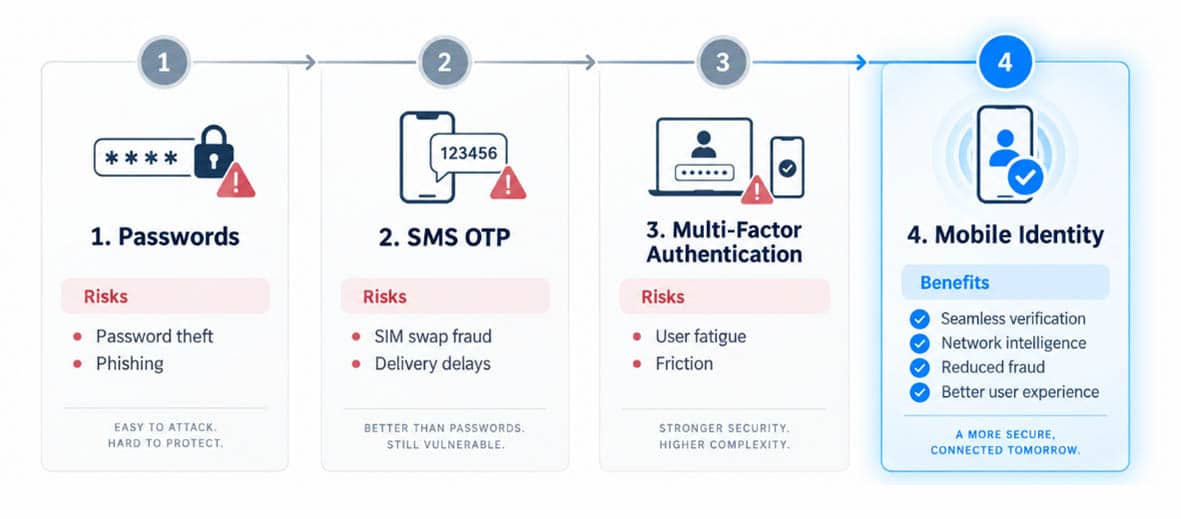
In high-volume digital journeys, this friction becomes a business cost, affecting onboarding, checkout, and account recovery. With Bank Negara Malaysia reporting over RM399 million in attempted fraudulent transactions prevented in 2024, identity risk is now an operational, financial, and reputational concern.
How Enterprise Mobile Identity by TM One Works
Enterprise Mobile Identity by TM One uses trusted telco intelligence, including mobile number, SIM and device signals, to verify users securely in the background.
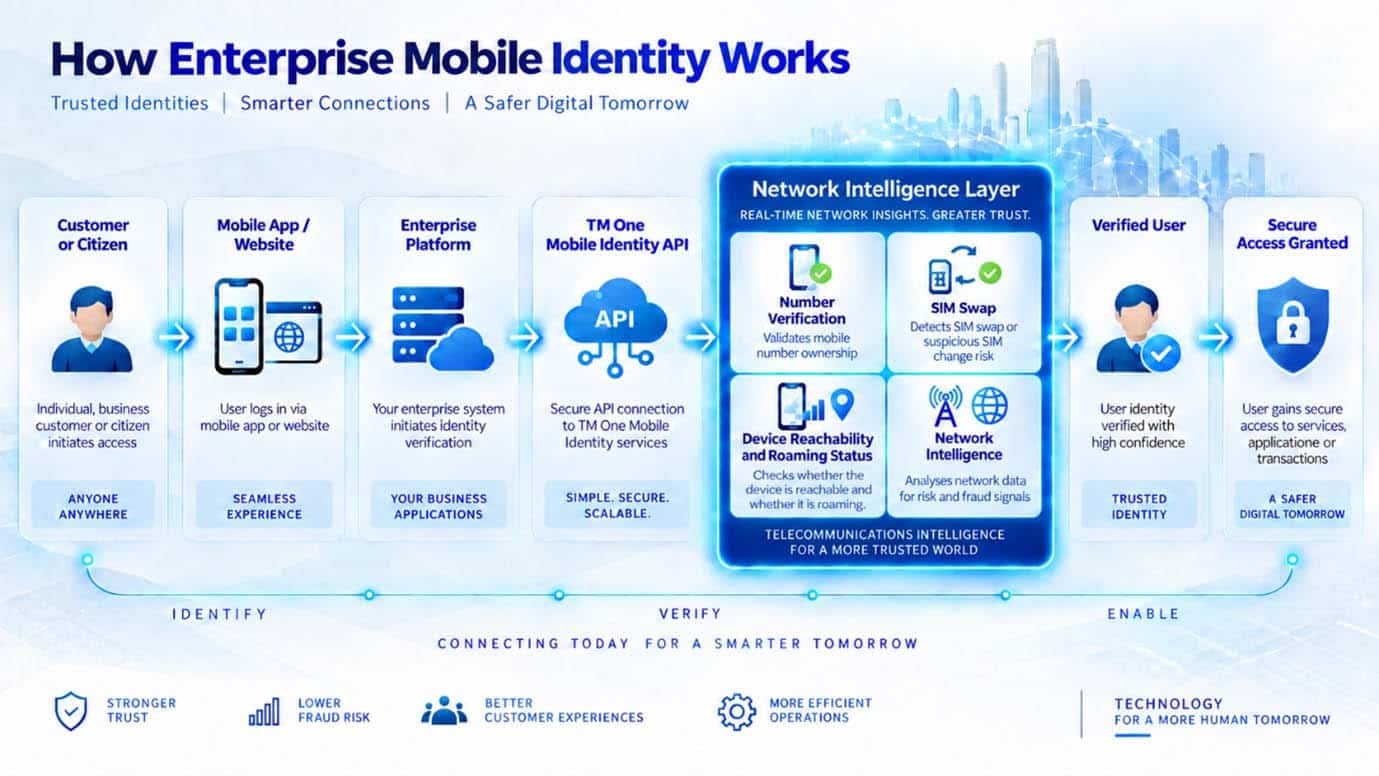
When a customer or citizen signs up, logs in, recovers an account or authorises a transaction, the organisation’s platform sends a secure verification request. Network intelligence checks relevant identity and SIM-related indicators before returning a result to support the journey.
For users, this means less waiting, less typing and fewer interruptions. For organisations, it provides stronger confidence that the interaction is linked to the right user and device.
With mobile identity APIs gaining global momentum, Enterprise Mobile Identity by TM One supports the shift toward API-enabled, network-based verification, helping organisations move beyond OTP dependency toward a scalable digital trust layer.
Enterprise Mobile Identity by TM One also brings a key sovereignty advantage. The platform is developed internally and hosted on TM One’s sovereign cloud, giving enterprises and government agencies greater confidence in data residency, governance, and operational control.
This is especially important for regulated industries and public sector services where digital identity, citizen access, and sensitive transaction data must be protected within a trusted local environment. By reducing dependency on external platforms and foreign cloud environments, TM One supports Malaysia’s ambition to build secure, resilient and sovereign digital trust infrastructure.
Executive Insight
Mobile Identity is not simply an OTP replacement. It is a new trust layer that supports better customer experience, stronger fraud prevention, compliance confidence and scalable digital services.
What Leaders Should Do Next
Enterprise and government leaders can begin by identifying where identity risk is highest across critical digital journeys, including onboarding, login, payment authorisation, account recovery, profile changes and citizen service access.
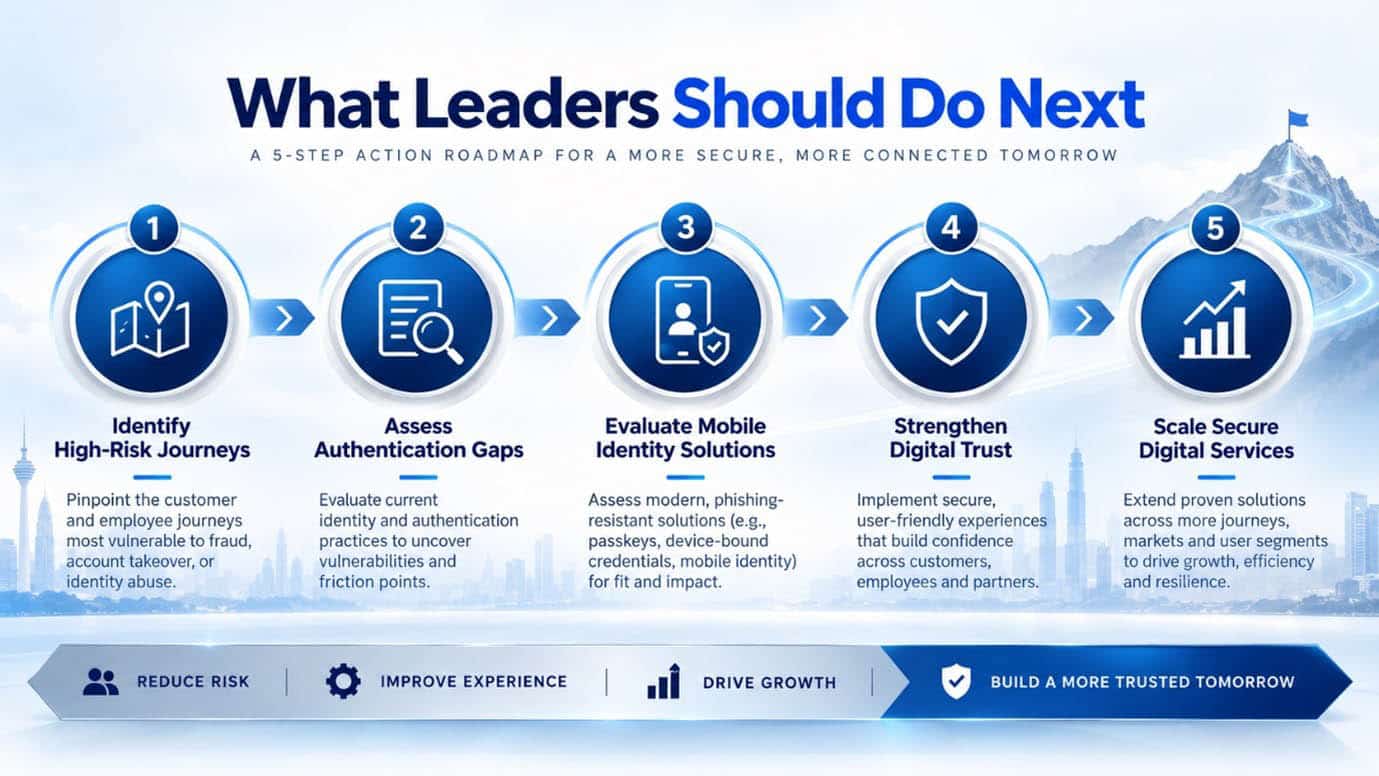
Beyond OTP delivery cost, the wider impact of legacy authentication must also be assessed, from fraud exposure and service abandonment to customer complaints and reduced trust in digital channels.
For CIOs, CTOs and CISOs, mobile identity verification offers an opportunity to strengthen cybersecurity controls, digital platforms and Zero Trust strategies. For government agencies, trusted identity can help secure citizen services, licensing, healthcare access, subsidy-related platforms and smart city ecosystems.
Mobile Identity will become an additional layer of future digital services, and TM One is well positioned to help enterprises and government agencies strengthen digital trust in Malaysia.